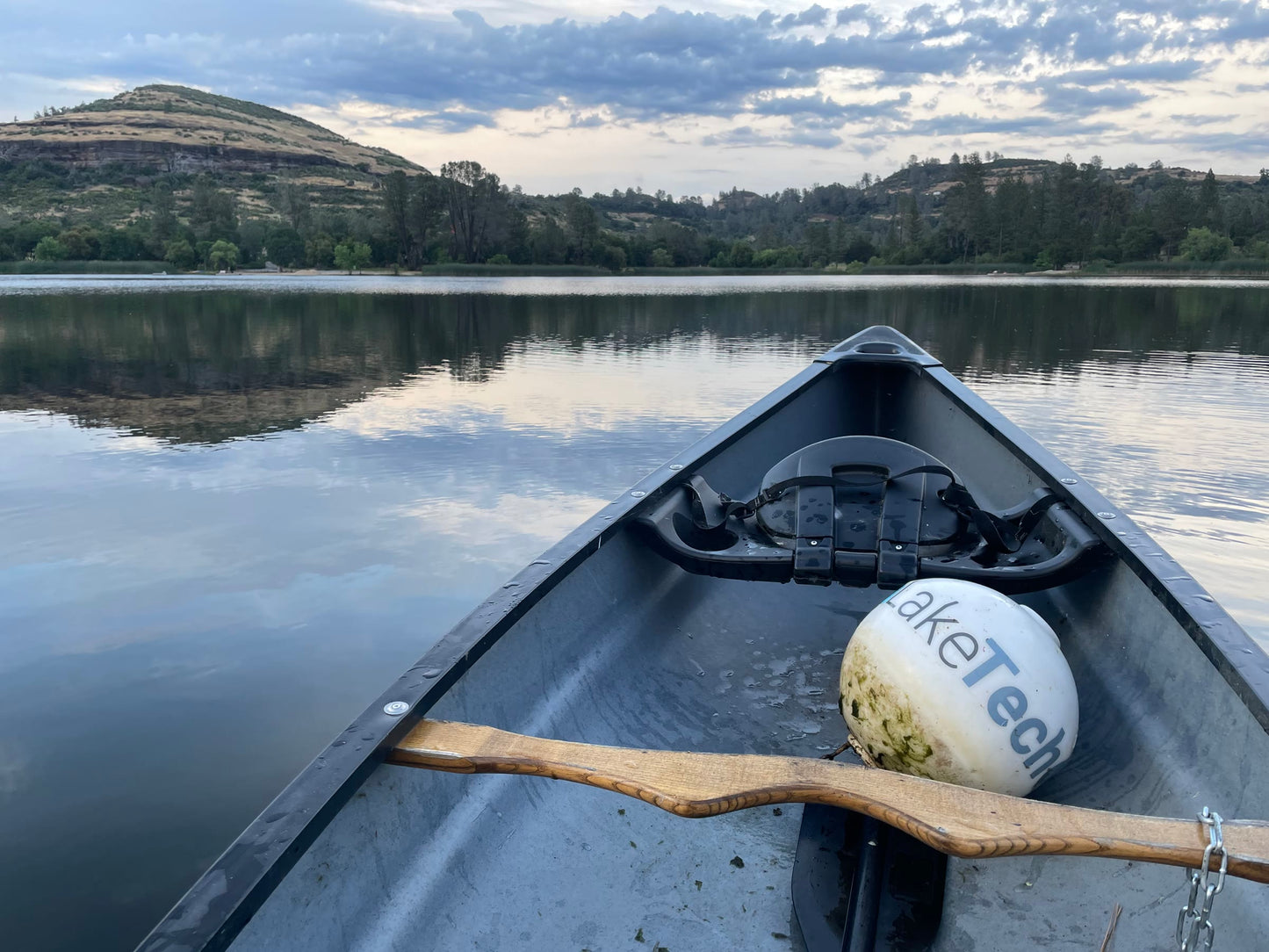
LakeTech
LakeTech Top/Middle/Bottom
LakeTech Top/Middle/Bottom
Couldn't load pickup availability
Share the product, quantity, site, and delivery details you already have.
See the entire water column, not just the water you can see. A lake can look healthy at the surface while dissolved oxygen is falling in the deep water. LakeTech Top/Middle/Bottom measures dissolved oxygen and temperature at three selected depths, giving lake managers a continuous view of surface conditions, the middle transition zone, and the water just above the lakebed.
Why measuring the top and bottom matters
During warm, calm weather, many lakes separate into layers. The upper layer is warmed by the sun and mixed by wind. It can receive oxygen from the atmosphere and from photosynthesis. The colder bottom layer is cut off from that regular exchange. At the same time, bacteria and other organisms consume oxygen as they break down algae, leaves, and other organic material that settles toward the bottom.
That means one surface reading cannot describe the whole lake. The top and bottom sensors reveal the vertical oxygen difference that matters for habitat and day-to-day management:
- Top sensor: Tracks the warm, mixed surface layer, where temperature, weather, sunlight, and algae can cause fast daily changes.
- Bottom sensor: Watches the deep water where oxygen loss often begins and where sediment and decomposing organic matter create strong oxygen demand.
- Top-to-bottom comparison: Shows when the lake is becoming strongly stratified, when deep water is losing oxygen even though the surface still looks normal, and whether an aeration or oxygenation strategy is improving conditions at depth.
The middle sensor helps reveal the thermocline
The thermocline is the middle transition zone where temperature changes quickly with depth. It acts as a density barrier between warm surface water and cool bottom water, reducing natural mixing between the two layers. Its depth and strength can change with season, wind, storms, inflow, and aeration.
A middle sensor placed near the expected thermocline adds the context that top-and-bottom monitoring alone cannot provide. By comparing temperature and dissolved oxygen at all three depths, you can see whether the middle depth is behaving more like the surface or the bottom, recognize when the transition zone is forming, and detect when it moves above or below the selected middle depth. The middle reading also helps show whether usable fish habitat is being compressed into a narrowing band between water that is too warm near the surface and water that is oxygen-poor below.
Three fixed depths provide a practical, continuous picture of lake structure. For lakes that need a precise full-depth profile, LakeTech can help select additional monitoring depths or pair the system with periodic profiling.
Bottom oxygen is an early warning for fish-kill risk
Fish need dissolved oxygen, but deep water can steadily lose it during summer stratification. As bottom oxygen declines, fish and other aquatic life lose access to deeper, cooler habitat. If a storm, rapid cooling event, or seasonal turnover mixes oxygen-poor bottom water into the rest of the lake, oxygen conditions can deteriorate across a much larger portion of the water column.
Maintaining adequate oxygen at depth with a properly designed aeration or oxygenation system can preserve more usable habitat and reduce the risk from low-oxygen fish kills. Continuous bottom monitoring gives you time to respond before fish are visibly stressed, and it lets you verify that the management system is reaching the depth where oxygen demand is greatest. Low dissolved oxygen is an important cause of fish kills, but it is not the only cause, so readings should be interpreted with weather, algae, water chemistry, and site conditions.
Manage from evidence, not surface appearance
With top, middle, and bottom data in one record, lake managers can answer practical questions:
- Is the surface masking oxygen loss in deep water?
- When is stratification forming, strengthening, weakening, or turning over?
- Is the thermocline moving relative to the selected middle depth?
- Is low oxygen squeezing fish into a smaller band of suitable habitat?
- Is aeration or oxygenation improving conditions at the bottom, not only at the surface?
Complete system includes
- 1 LakeTech Buoy and Hardware assembly
- 1 VuLink Cellular Telemetry Device
- 1 High-Gain Whip Antenna
- 1 Lithium Battery (LiMnO2)
- 1 Cable Splitter
- 3 RDO Blue dissolved oxygen and temperature probes
- 1 one-foot Twist-Lock cable for the top probe
- 1 Twist-Lock cable for the selected middle depth
- 1 Twist-Lock cable for the selected bottom depth
Select the middle and bottom monitoring depths. Only valid combinations with the middle probe above the bottom probe are available. Every variant is priced as a complete, fully built system. For best results, choose depths using the lake's bathymetry, expected thermocline, target fish habitat, and management goals.